“The Difference Between microRNA Abnormality Syndrome—an Epigenetic Dysregulation—and Congenital Diseases Caused by Genetic Abnormalities”
<Why do our faces differ between the right and left sides?
A new perspective: subtle “initial‑setting errors” hidden in the blueprint of life>
Have you ever looked in the mirror and thought, “My right and left sides look slightly different”?
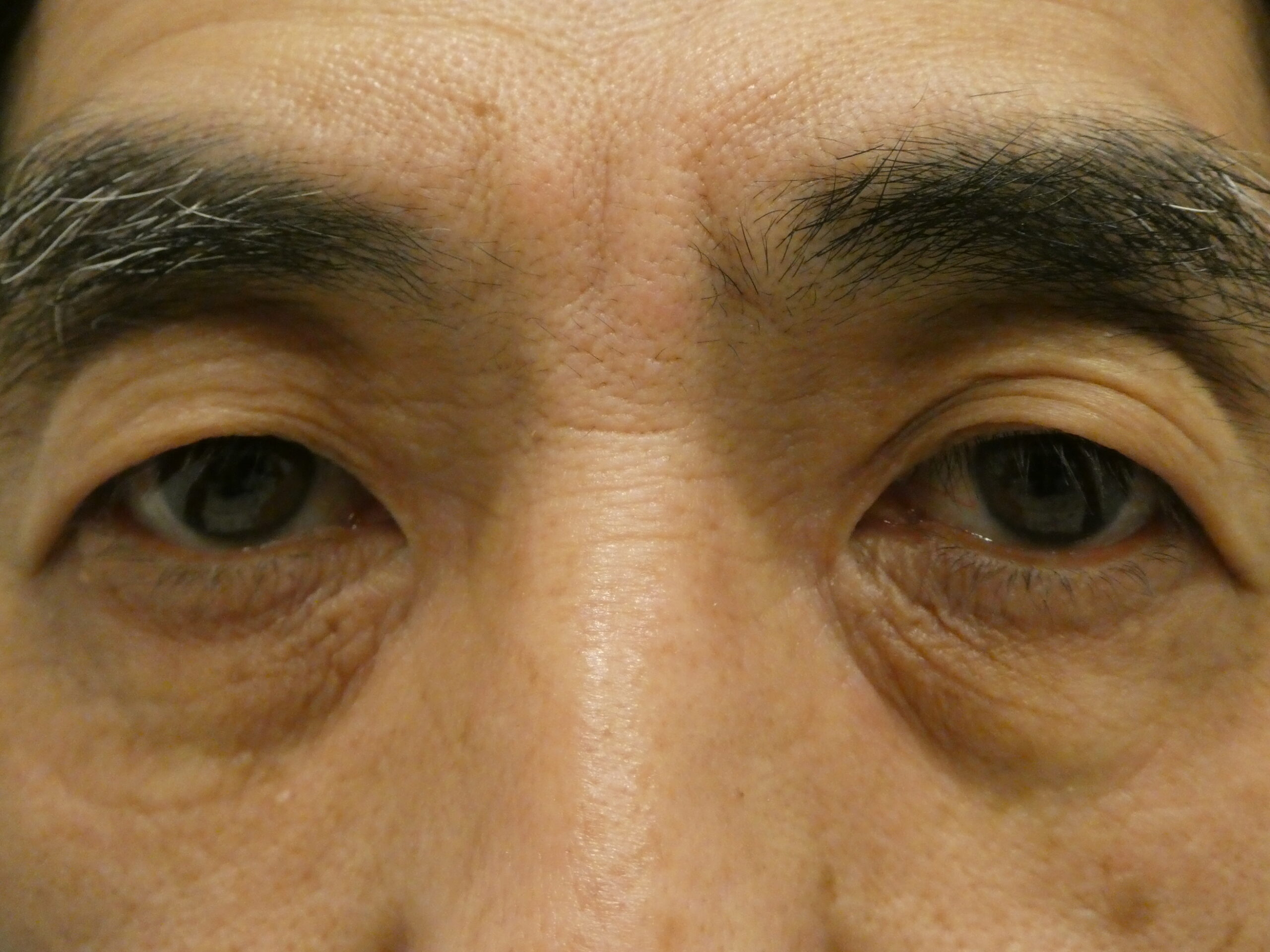
Some people notice that wrinkles are deeper on one side, or that muscle loss progresses faster on one side. Others may even experience the sudden appearance of a double eyelid on just one side.
Interestingly, many of these localized differences cannot be explained by abnormalities in the genes themselves.
So why do they occur?
The key lies in a brief window of time—just a few days between 4 and 7 days after fertilization, when we were still nothing more than a tiny cluster of cells.
◆ The “initial settings” established at the very beginning of life
Between days 4 and 7 after fertilization, the body has no shape yet; it is simply a mass of cells. During this period, cells exchange tiny “message capsules” with one another. These are particles called EVs (extracellular vesicles / exosomes), which contain microRNAs—molecules that regulate how genes are used.
If DNA is the “blueprint,” then microRNAs are the “editors” that decide which parts of the blueprint will be used.This editing process occurs rapidly during days 4–7 after fertilization.
In other words, the specific microRNAs a cell receives during this period determine its future role.
◆ How tiny deviations in the initial settings create localized differences
EVs do not reach all cells evenly. Because they are exchanged mainly between neighboring cells, the amount of microRNA received can differ slightly between cell clusters.
This very small difference can later appear as:
Differences in skin quality between the right and left sides
Muscle weakness on only one side
Faster aging of one vocal fold
Asymmetry in eyelid shape
Even though the DNA is identical on both sides, appearance and aging speed can differ.
This becomes easy to understand if we assume that the initial microRNA settings were slightly different between the right and left sides.
◆ The intriguing fact that these differences can “change later”
What is fascinating is that deviations in microRNA settings may be correctable even after birth.
Indeed, treatments using iPSC‑derived EVs have been reported to produce:
Improvement of age‑related vocal fold atrophy
Localized skin rejuvenation
Changes in eyelid shape
These phenomena make sense if we consider that supplementing the microRNAs that were insufficient during the initial settings can reactivate dormant developmental programs.
◆ A new perspective: not “genetic abnormalities” but “initial‑setting biases”
We tend to attribute physical traits to “genes.”
However, even when DNA is completely normal, a slight deviation in the early “gene‑usage program” can create localized differences.
This perspective helps explain phenomena that were previously difficult to understand:
Left–right asymmetry
Localized aging
Partial weakness
Sudden changes appearing later in life
Our bodies carry the influence of those few days of “initial settings” after fertilization throughout our entire lives.
Thinking this way may make the small differences we see in the mirror each day feel a bit more endearing.
【 microRNA! Huh? — April 9, 2026 】
▼ Detailed Medical Explanation
- EV‑mediated initialization of developmental programs in early embryos (days 4–7)
Days 4–7 post‑fertilization correspond to the stage before trilaminar germ layer formation, when the inner cell mass (ICM) still retains totipotency to pluripotency.
During this period, ES‑like cells release large quantities of EVs (exosomes, microvesicles) containing:
Developmental‑regulating microRNAs (miR‑302/367, miR‑290–295 cluster, etc.)
microRNAs that regulate DNA‑methylation enzymes
microRNAs modulating Wnt, Notch, and TGF‑β pathways
microRNAs involved in chromatin structure maintenance (e.g., miR‑34, miR‑146)
These function as initialization signals that determine which lineage each cell will follow.
Thus, EVs act as carriers that set the gene‑expression program.
- Deviations in microRNA sets represent “programming bias,” not DNA abnormalities
microRNAs:
Regulate hundreds of mRNAs each
Determine ON/OFF states of developmental lineages
Form local concentration gradients
Therefore, even slight deviations in microRNA sets during early embryogenesis can alter the developmental direction of specific cell groups.
Examples:
miR‑200 deficiency → weaker epithelialization
miR‑133/1 deficiency → delayed muscle fiber maturation
miR‑29 deficiency → impaired ECM remodeling
miR‑146a deficiency → weaker local inflammation control
These occur even when DNA is completely normal.
- Why the resulting phenotypes are “localized”
Reason 1: Early‑embryo EVs act on cell clusters, not the whole embryo
EVs are exchanged through close‑range cellular networks.
→ Only specific clusters may receive different microRNA sets, producing localized deviations in developmental programs.
Reason 2: Boundary regions are especially sensitive
Examples:
Eyelid skin–muscle boundary
Vocal fold mucosa–muscle boundary
Left–right skin differences
Unilateral muscle mass differences
Boundary regions convert small microRNA differences into large morphological differences.
Reason 3: microRNAs maintain local tissue homeostasis
If the initial microRNA set is biased, lifelong deficits may occur in:
Regeneration capacity
ECM remodeling
Local inflammation control
Maturation of neural innervation
→ These manifest as left–right differences, localized aging, or localized morphological changes.
- Why EV therapy can modify phenotypes after birth
DNA abnormalities are permanent.
But microRNA abnormalities represent programming bias, which can be corrected.
iPSC‑derived EVs contain:
microRNA sets similar to those in early development
Regeneration‑promoting microRNAs
ECM‑remodeling microRNAs
Thus, they can restart developmental programs that were incompletely set.
Examples:
Acquired double eyelids
Improvement of vocal fold aging
Localized skin rejuvenation
Improvement of unilateral muscle mass
These are consistent with cases where DNA is normal but microRNA sets were biased.
- Expert Summary
EVs during days 4–7 post‑fertilization distribute lineage‑determining microRNA sets to cell clusters, functioning as an “initialization device” for developmental programs.
Biases in EV reception during this period cause localized deviations in developmental programs without any DNA abnormalities.
These manifest after birth as differences in morphology, regenerative capacity, and tissue homeostasis.
Because microRNA deviations are correctable, EV therapy can reactivate latent programs and modify localized phenotypes.
[This article was first released in the TIMC microRNA News on April 9, 2026.]
Note
The disease concept “microRNA abnormality syndrome / microRNA dysregulation syndrome” is a future disease name proposed by Dr. Fukutomi of TIMC.
【遺伝子の発現異常であるマイクロRNA異常症と、遺伝子異常による先天性疾患の違い】
<なぜ“左右で違う顔”になるのか──生命の設計図に潜む“初期設定ミス”という発想>
鏡を見ていて、「あれ、右と左で顔が少し違うな」と感じたことはありませんか。
片側だけシワが深い、片側だけ筋肉が落ちやすい、あるいは、ある日突然“二重まぶた”が生まれた──そんな経験を持つ人もいるでしょう。
実はこうした“局所的な違い”は、遺伝子そのものの異常では説明できないことが多いのです。
では、なぜ起こるのでしょう。
鍵を握るのは、私たちがまだ“受精卵のかけら”だった頃、受精後4〜7日のたった数日間にあります。
◆生命のスタート地点で行われる「初期設定」
受精後4〜7日というのは、まだ身体の形も何もない、細胞の塊の時期です。この時期、細胞同士は小さな“メッセージカプセル”を送り合っています。それが EV(エクソソーム) と呼ばれる粒で、中にはmicroRNAという“遺伝子の使い方を調整する分子”が詰まっています。DNAが「設計図」だとすれば、microRNAは「設計図のどこを使うかを決める編集者」。この編集作業が、受精後4〜7日の間に一気に行われます。つまり、この時期にどんなmicroRNAを受け取ったかで、その細胞の“将来の役割”が決まるのです。
◆“初期設定のわずかなズレ”が、なぜ局所的な違いになるのか
EVは細胞全体に均等に届くわけではありません。近くの細胞同士でやり取りされるため、細胞の集団ごとに受け取るmicroRNAの量が微妙に違うことがあります。
この“ほんの少しの差”が、
•右と左の皮膚の質の違い
•片側だけ筋肉が弱い
•声帯の老化が早い
•まぶたの形が左右で違う
といった、局所的な表現型の違いとして生後に現れるのです。DNAは左右で同じなのに、見た目や老化のスピードが違う──
これは、初期設定のmicroRNAが左右でわずかに違っていたと考えると、とても自然に説明できます。
◆“後から変わる”という不思議
興味深いのは、こうしたmicroRNAのズレは、生まれた後でも修正できる可能性があるという点です。実際、iPS細胞由来のEVを使った治療で、
•声帯の老化が改善した
•皮膚の局所的な若返りが起きた
•まぶたの形が変わった
といった現象が報告されています。
これは、初期設定で不足していたmicroRNAを“後から補う”ことで、眠っていたプログラムが再び動き出したと考えると理解しやすいのです。
◆「遺伝子異常」ではなく「初期設定の偏り」という新しい視点
私たちはつい、身体の特徴を「遺伝子のせい」と考えがちです。
しかし、実際にはDNAが正常でも、“遺伝子の使い方”が初期に少しズレただけで、局所的な違いが生まれることがあります。
これは、
•左右差
•局所的な老化
•部分的な弱さ
•ある日突然の変化
といった、これまで説明が難しかった現象を理解するための新しい視点になります。
私たちの身体は、受精後わずか数日の“初期設定”の影響を、一生背負って生きている。
そう考えると、日々鏡に映る自分の顔や身体の“ちょっとした違い”も、どこか愛おしく感じられるかもしれません。
【マイクロRNA!はて? 2026年4月9日】
▼医学的な詳しい解説
◆1. 初期胚(4〜7日)のEVが担う「発生プログラムの初期化」
受精後4〜7日は、内部細胞塊(ICM)→三胚葉形成の前段階であり、細胞はまだ全能性〜多能性を保持している。この時期のES細胞様細胞は、大量のEV(exosomes, microvesicles)を放出し、
そのEVには以下が高濃度に含まれる。
•発生制御microRNA(miR-302/367, miR-290-295 cluster など)
•DNAメチル化酵素を制御するmiRNA
•Wnt, Notch, TGF-β系の調節miRNA
•染色体構造維持に関わるmiRNA(例:miR-34, miR-146)
これらは、「どの細胞がどの系譜へ進むか」を決める“初期化信号”として働く。
つまり、EVは「遺伝子の使い方(発現プログラム)」をセットする媒体である。
◆2. microRNAセットのズレは「DNA異常」ではなく「発現プログラムの偏位」
microRNAは、
•1つで数百のmRNAを制御し
•発生系譜の“ON/OFF”を決める
•局所的に濃度勾配を形成する
という特徴を持つ。したがって、初期胚期にmicroRNAのセットがわずかにズレるだけで、局所的な細胞群の発生方向が変わる。
例:
•miR-200系の不足 → 上皮化が弱くなる
•miR-133/1の不足 → 筋線維の成熟が遅れる
•miR-29の不足 → ECMリモデリングが弱くなる
•miR-146aの不足 → 局所炎症制御が弱くなる
これらはDNAが正常でも起こる。
◆3. なぜ「局所的な表現型」になるのか
◆理由1:初期胚EVは“細胞群単位”で作用する
EVは拡散ではなく、細胞間の近接ネットワークで受け渡される。
→ そのため、特定の細胞クラスターだけが異なるmicroRNAセットを受け取る =局所的な発生プログラムの偏位が生じる。
◆理由2:発生初期の“境界領域”は特に影響を受けやすい
例:
•眼瞼の皮膚と筋の境界
•声帯の粘膜と筋の境界
•皮膚の左右差
•片側の筋量差
境界領域は、複数の系譜が接するため、微小なmiRNA濃度差が大きな形態差に変換される。
◆理由3:microRNAは「局所的な恒常性維持」にも関与
初期セットがズレると、
•再生能力
•ECMリモデリング
•局所炎症制御
•神経支配の成熟
などが、生涯にわたり“弱いまま”になる。
→ これが、左右差・局所老化・局所的形態変化 として現れる。
◆4. 生後にEV治療で変化しうる理由
DNA異常は生涯変わらないが、
microRNA異常は「発現プログラムの偏位」なので、後から補正可能である。
iPS細胞由来EVには、
•発生期に近いmiRNAセット
•再生促進miRNA
•ECMリモデリング促進miRNA
が含まれるため、初期胚期の“セットし損ねたプログラム”を再起動できる
例:
•二重瞼の後天的出現
•声帯老化の改善
•皮膚の局所的若返り
•片側筋量の改善
これらは、DNAが正常で、microRNAセットだけが偏位していた場合に説明がつく。
◆5. 専門家向けの総括
受精後4〜7日のEVは、細胞系譜決定に必要なmicroRNAセットを細胞群単位で配布する“発生プログラムの初期化装置”である。この時期のEV受容の偏位は、DNA異常を伴わずに、局所的な発生プログラムの逸脱を生じる。その結果、形態・再生能力・組織恒常性の局所的差異として生後に顕在化する。microRNAは後天的に補充可能であるため、EV治療により潜在プログラムが再活性化し、局所表現型が変化しうる。
【上記の文章は、2026年4月9日、TIMCマイクロRNA新報に初回プレスリリースされました】
※マイクロRNA異常症(microRNA abnormality syndrome / microRNA dysregulation syndrome)という疾患概念は、TIMCの福富医師が提唱している未来の病名です。